

 Facebook
 X
X
 Pinterest
 Copy Link
Is Houston Multifamily Overpriced? Why Some Investors Are Pivoting to Shopping Centers
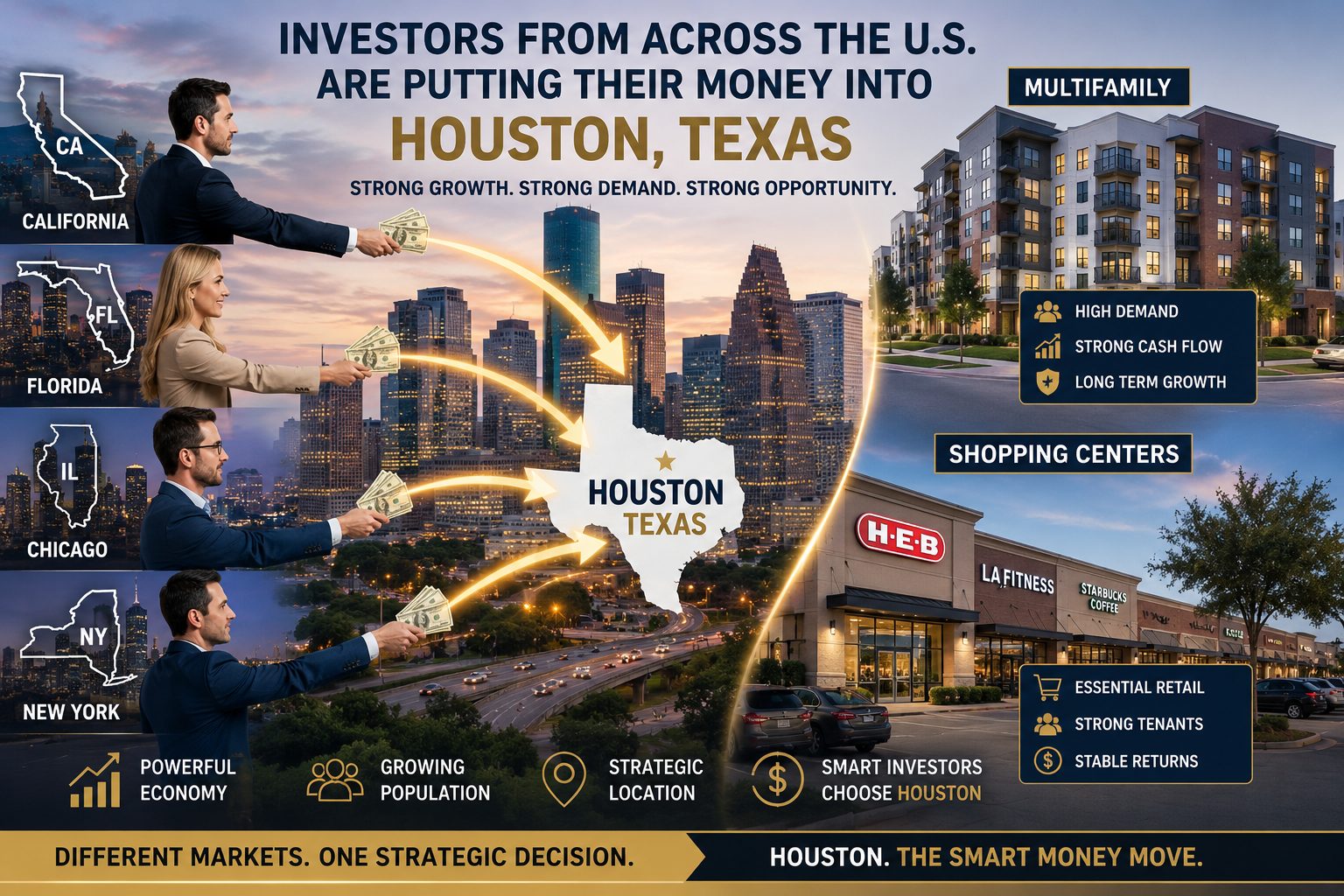 Out-of-state investors continue pouring capital into Houston commercial real estate. As multifamily cap rates compress and operating costs rise, many seasoned investors are beginning to explore shopping centers and necessity-based retail for stronger long-term yield and stability.
For years, multifamily real estate has been one of the hottest investment sectors in Houston.
Apartment syndications surged. Institutional capital flooded Texas. Meanwhile, out-of-state investors aggressively pursued multifamily opportunities across Houston and the greater Sunbelt region.
For a while, the strategy made perfect sense.
Houston offered:
- strong population growth
- increasing rental demand
- corporate relocations
- relative affordability compared to coastal markets
However, the conversation is starting to shift.
Today, many experienced investors are asking a different question:
Are Houston multifamily deals still producing enough return relative to the risk?
Why Multifamily Became So Popular
Over the last several years, Houston became a major target for investors from:
- Los Angeles
- New York City
- Miami
Compared to many major U.S. cities, Houston offered lower entry prices and stronger rental demand. In addition, Texas continued attracting both businesses and residents looking for affordability and economic opportunity.
Because of this, investor competition increased rapidly.
As demand grew, pricing followed.
The Cap Rate Conversation Is Changing
One of the biggest concerns investors are discussing today is cap rate compression.
Simply put, investors are paying more money for the same amount of income.
As a result, profit margins can become tighter. At the same time, operating costs continue rising across Texas.
Many owners are now facing:
- higher insurance premiums
- increasing property taxes
- elevated maintenance costs
- more expensive debt
In some cases, multifamily assets are being purchased based on projected future rent growth rather than current operational performance.
That is where experienced investors often become cautious.
Houston’s Apartment Supply Continues Growing
Meanwhile, Houston continues adding new apartment inventory at a rapid pace.
While long-term demand remains strong, several submarkets are beginning to experience:
- increased vacancy
- rent concessions
- slower leasing activity
- heavier tenant competition
Luxury Class A properties, in particular, are facing pressure in some areas. As a result, many operators are offering:
- free rent specials
- reduced deposits
- move-in incentives
to maintain occupancy levels.
This does not mean multifamily is a bad investment.
However, it does mean investors are becoming far more selective than they were several years ago.
Why Shopping Centers Are Regaining Attention
At the same time, many investors are quietly reevaluating shopping centers and retail assets.
For years, retail was viewed as risky because of e-commerce growth. However, not all retail categories are easily replaced online.
Necessity-based retail continues performing surprisingly well in many Houston markets.
Examples include:
- medical tenants
- restaurants
- coffee shops
- fitness studios
- nail salons
- grocery-anchored centers
- insurance offices
- wellness businesses
Consumers still rely heavily on convenience and service-oriented businesses. Because of this, well-positioned shopping centers continue attracting both tenants and investors.
Why Some Investors Prefer Retail Right Now
One major reason investors are reconsidering retail is cap rates.
In many cases, shopping centers are producing stronger cap rates than multifamily properties.
In addition:
- lease terms are often longer
- tenants may cover portions of expenses through NNN leases
- operational intensity can sometimes be lower than apartments
For seasoned investors, this creates a different type of risk-versus-reward conversation.
Instead of focusing only on appreciation, many are prioritizing:
- stable cash flow
- durable tenant demand
- operational efficiency
- long-term sustainability
Multifamily vs. Shopping Centers: Which Is Better?
The truth is neither asset class is perfect.
Both multifamily and retail can perform well when:
- purchased correctly
- financed conservatively
- managed strategically
A poorly purchased apartment complex can underperform a well-positioned shopping center.
Likewise, a weak retail center can struggle more than stabilized workforce housing.
Ultimately, experienced investors focus less on trends and more on fundamentals.
Houston Still Has Opportunity
Despite today’s challenges, Houston remains one of the most important commercial real estate markets in the country.
The city continues benefiting from:
- economic growth
- population increases
- infrastructure expansion
- medical industry growth
- port and logistics activity
Because of this, opportunity still exists in both multifamily and retail.
However, today’s market requires more discipline than ever before.
The era of:
“Buy anything and rents will save you”
is fading quickly.
Instead, successful investors are focusing on:
- sustainable cash flow
- conservative underwriting
- operational stability
- long-term market fundamentals
Final Thoughts
The Houston commercial real estate market is evolving.
Multifamily remains an important asset class. Meanwhile, shopping centers are quietly regaining investor attention.
However, the investors likely to outperform moving forward may not be the ones chasing hype.
Instead, they may be the ones asking tougher questions about:
- risk
- sustainability
- long-term yield
- operational durability
And in today’s market cycle, that mindset matters more than ever.
References
CBRE. (2025). Houston multifamily market report. CBRE Research
CoStar Group. (2025). Houston retail market analysis and vacancy trends. CoStar Group
Marcus & Millichap. (2025). Houston retail and multifamily investment outlook. Marcus & Millichap Research
Matthews Real Estate Investment Services. (2025). Houston multifamily market report Q3 2025. Matthews REIS
Partners Real Estate. (2025). Houston retail quarterly market report. Partners Real Estate Research
PwC & Urban Land Institute. (2025). Emerging trends in real estate 2025. PwC Emerging Trends in Real Estate
Natalia Vargas
REALTOR® | Coldwell Banker Realty
Houston, Texas
📞 832-722-6474
Hablo Español
#NataliaInYourCorner
